Money Wellness Design System
Client:
Money Wellness
Year:
2023-2025
Role:
Lead Product Designer
Creating and evolving a scalable design system to unify product, marketing, and brand experiences across the organisation
Scope of work:
Project Overview
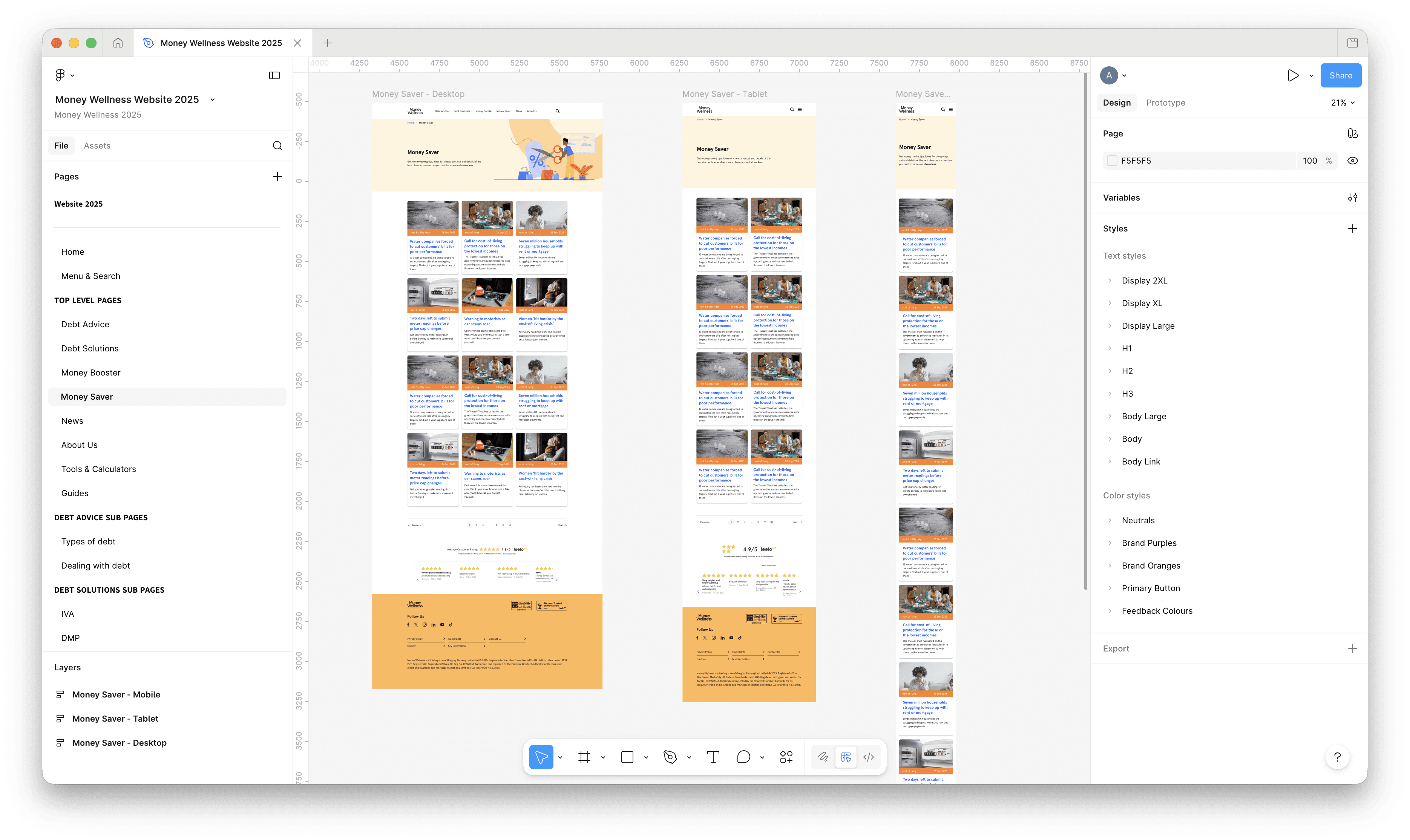
At Money Wellness, I led the creation and ongoing evolution of a centralised design system to bring consistency across the website, product interfaces, and digital marketing outputs.
Prior to this, there was no single source of truth for design. Teams were independently creating components and layouts, which led to inconsistency, duplicated effort, and slower delivery across projects.
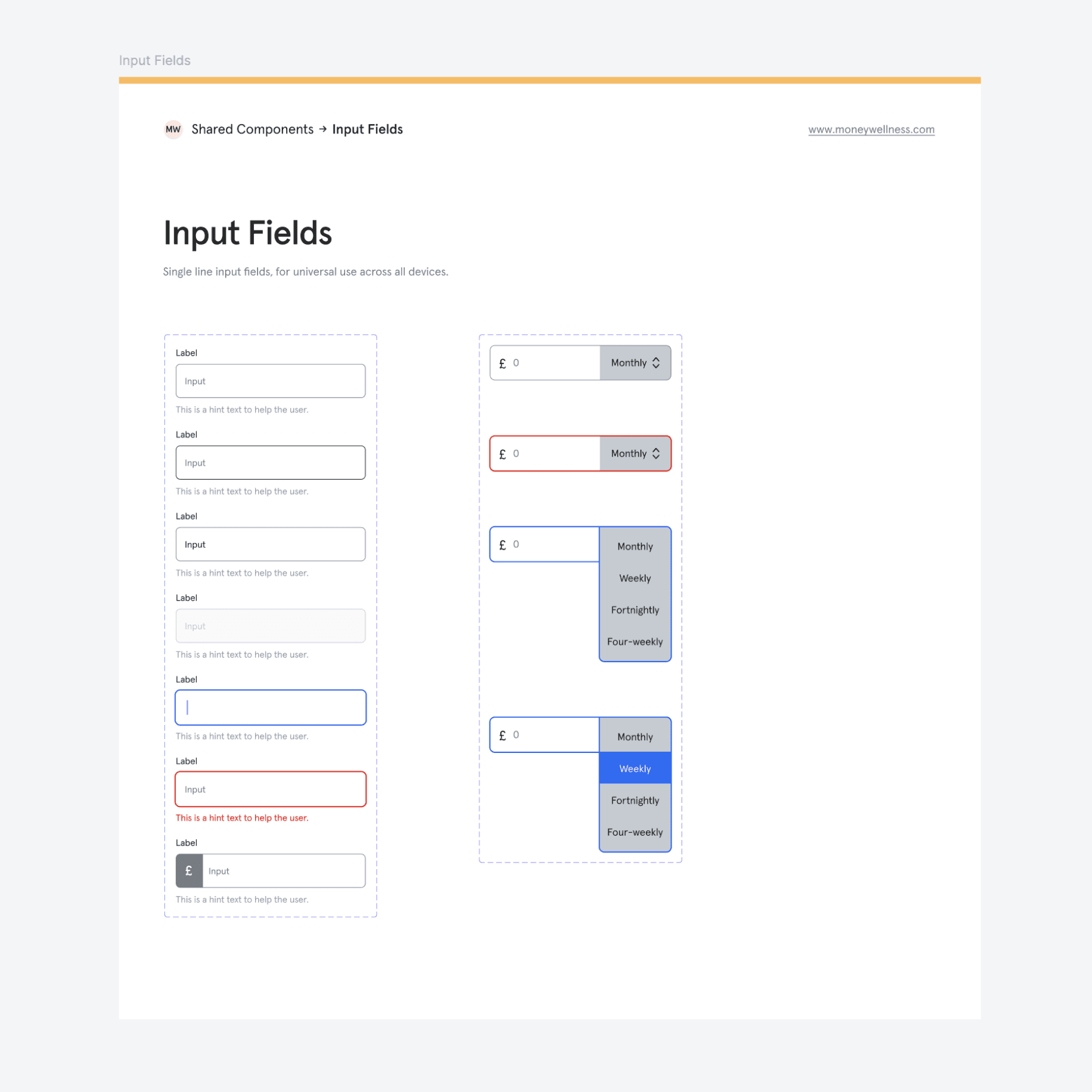
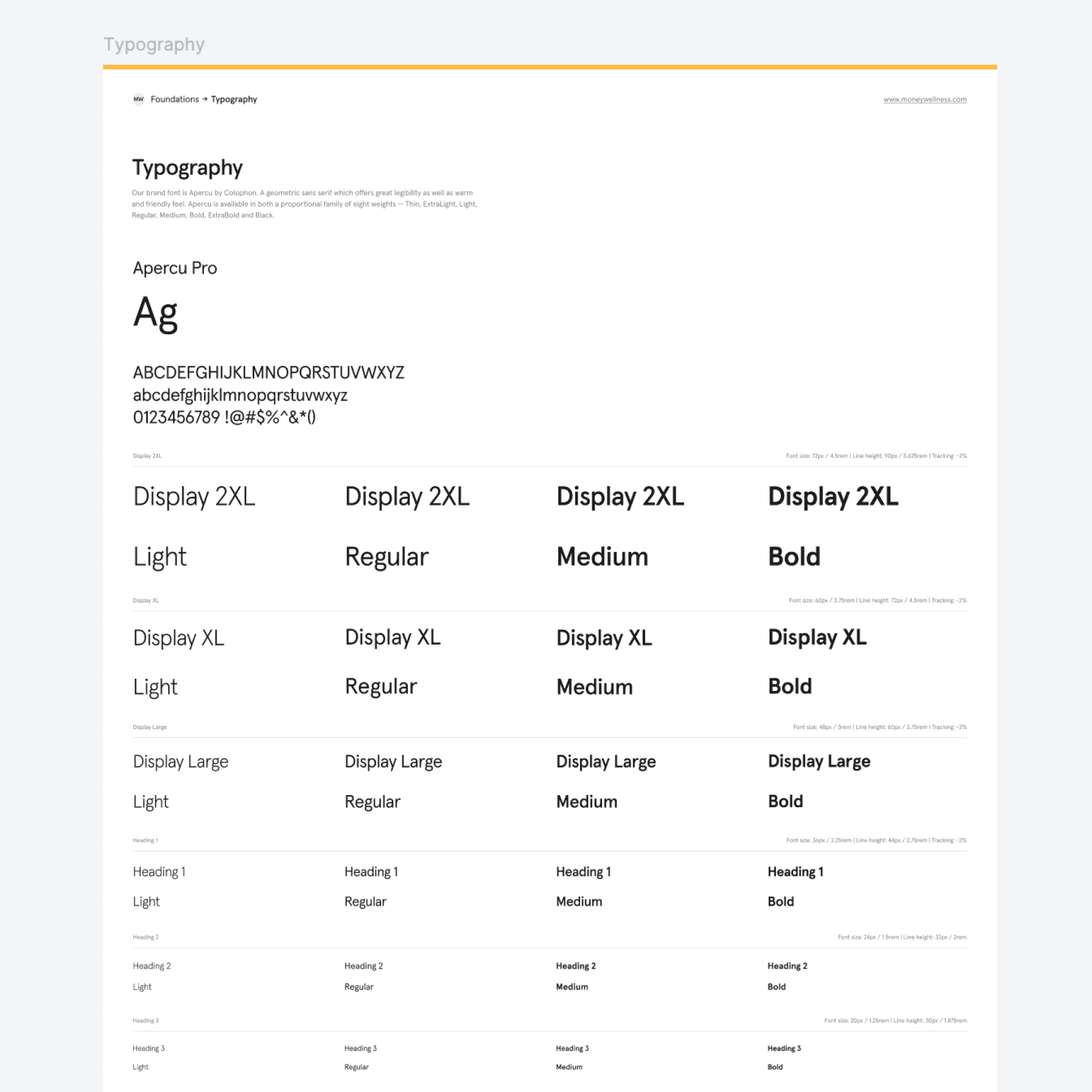
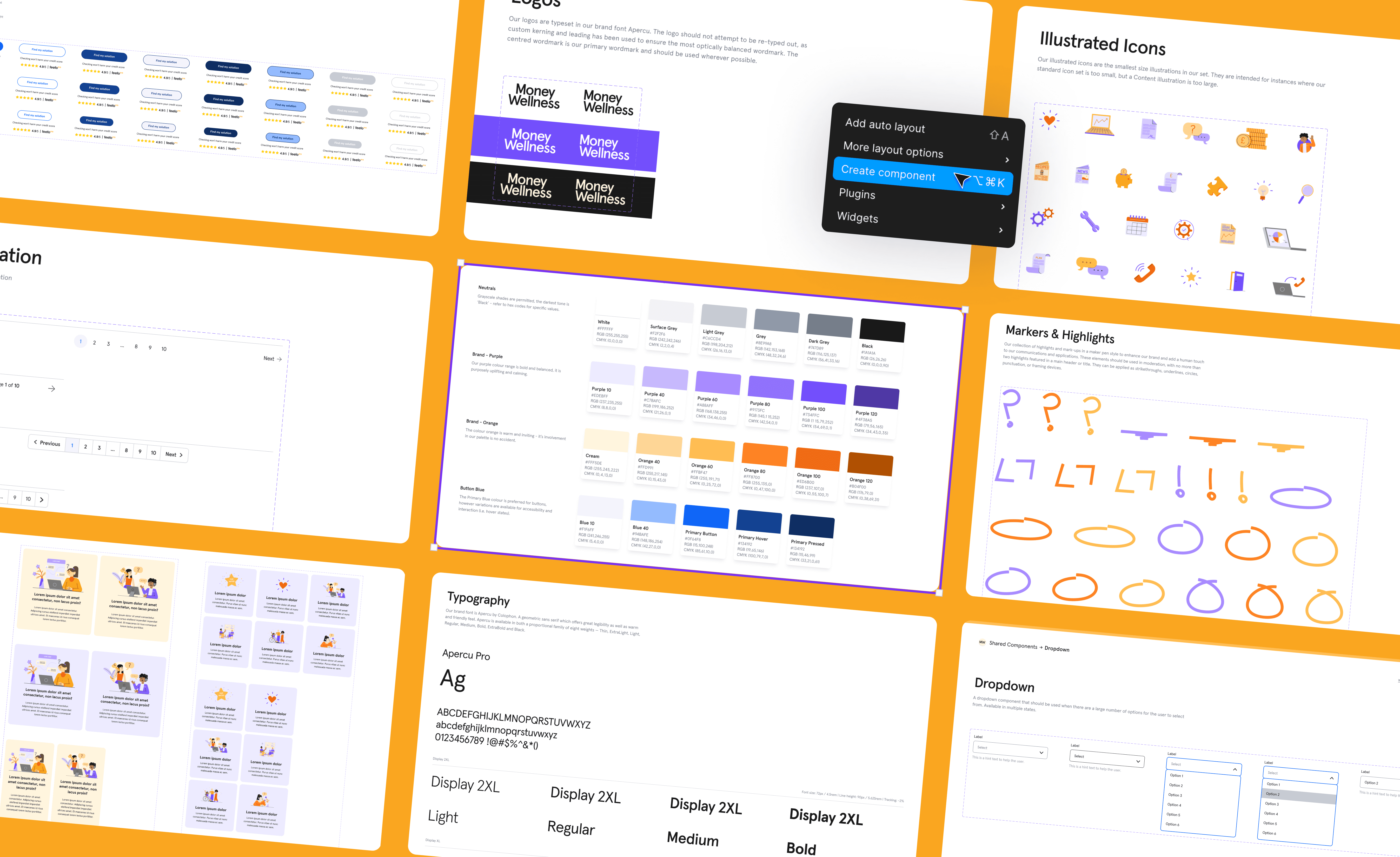
The design system established a structured foundation in Figma, covering core components, typography, colour, and interaction patterns. It is continuously maintained and updated to reflect the growth of the brand and evolving product needs.
Key impact
Reduced design and development duplication, improved consistency across digital products, and enabled faster delivery of new pages and features
Project Problem
Before the design system existed, the organisation faced several challenges:
No consistent source of truth for UI components or patterns
Repeated creation of similar elements across different teams
Visual and functional inconsistencies across digital touchpoints
Slower delivery due to redesigning common elements repeatedly
Difficulty maintaining brand consistency at scale
As the product and brand evolved, these issues became more pronounced and began to impact efficiency and user experience.
Project Constraints
Existing inconsistent UI patterns across legacy work
Multiple teams working with different levels of design maturity
Need to align both product and marketing requirements
Ongoing evolution of brand identity during implementation


Project Approach
I designed and implemented a scalable design system from the ground up, focusing on usability, clarity, and long-term maintainability.
My approach included:
Auditing existing digital products to identify repeated patterns and inconsistencies
Defining foundational elements such as typography, colour, spacing, and grid systems
Creating a modular component library in Figma, built for reuse and scalability
Establishing naming conventions and structural organisation to support long-term maintenance
Collaborating with stakeholders across product, marketing, and brand teams to ensure adoption
The system was designed not just as a library of components, but as a shared framework for how the organisation designs and builds digital experiences.
It is reviewed and updated annually to ensure it evolves alongside the brand and product roadmap.
Project Outcome
The design system is now used across multiple teams, including product, marketing, and brand.
It has enabled:
Faster creation of new pages and features
Reduced duplication of design effort across teams
Improved consistency across all digital touchpoints
Clearer communication between design, development, and stakeholders
Easier maintenance of brand assets over time
The system also allows updates (such as awards, accreditations, and brand changes) to be implemented in a non-disruptive way, without requiring redesign of existing assets.